By Don Loepp
EDITOR
Published: August 6, 2014 9:49 am ET
Updated: August 6, 2014 9:52 am ET
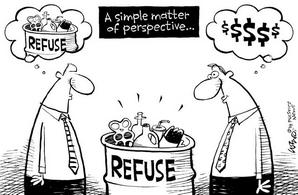
Image By: Rich Williams
The Plasticity Forum, held June 24 in New York, was a promising step forward for the plastics industry.
The question now: What’s the next step? Who’s taking the lead to make sure that the debate about the sustainability of plastics does not continue to just be a fight against product bans and taxes?
The conference brought together industry leaders (both the Society of the Plastics Industry Inc. and the American Chemistry Council were represented), entrepreneurs and environmentalists to discuss the future of plastics. The emphasis was on treating plastic as a resource, not as trash or litter.
Attendees included innovative thinkers who have put significant effort into coming up with alternative uses for plastic. People like Arthur Huang, co-founder and managing director of Miniwiz, a Taipei, Taiwan-based company dedicated to upcycling trash into high-performance and low-carbon materials suitable for uses ranging from buildings to consumer products.
And William McDonough, an architect and author of Cradle to Cradle, who has made a name for himself by repurposing older buildings and maximizing their sustainable benefits.
Plus Monique Maissan, CEO and founder of Waste2Wear, a company that recycles 100 percent post-consumer plastic bottles into eco-friendly fabrics.
Not to mention our old friend Michael Biddle, the founder of MBA Polymers Inc., who has spent most of his career proving that durable, difficult-to-recycle plastics can be retrieved and reprocessed economically.

Loepp
This was the third-annual Plasticity — the first two were held in Rio de Janeiro and Hong Kong. The event is organized by the Ocean Recovery Alliance and the Republic of Everyone, and has a goal of bringing together leaders to collaborate and to help scale up solutions that are coming to market, and to showcase some of the best ideas.
Biddle told the group that “there’s money to be made” in plastic waste, and that should be enough to get everyone’s attention. That’s really the key of making plastics more sustainable.
We know plastics have a great story to tell on things like carbon footprint and energy savings. But end-of-life issues will persist as long as plastics are such a visible problem in litter and marine debris, and for as long as recycling rates for plastics plod along at pedestrian rates.
I know that it’s not going to be possible to recycle all plastics — or even all single-use plastics. In some cases, it just doesn’t make sense. But there’s so much low-hanging fruit!
At the risk of sounding like a broken record, expanding state container deposit programs is an easy first step that the plastics industry should be behind 100 percent. |