By Don Loepp
EDITOR
Published: August 21, 2014 6:12 pm ET
Updated: August 21, 2014 6:58 pm ET
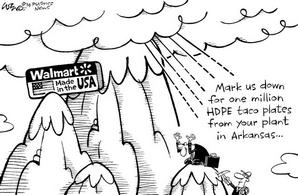
Image By: Rich Williams
Wal-Mart Stores Inc. has attracted a lot of attention with its latest “Made in the USA” push, and that’s been by design. TV ads that highlight the plan, with scenes from manufacturing plants — full of workers, by the way, and not robots — are cool.
Pundits have given Wal-Mart a hard time about the soundtrack — “Working Man,” by Rush. Really, they picked a Canadian group for a “Made in the USA” commercial. But no worries, it’s all good. Americans tend to use “U.S.” and “North American” almost interchangeably, except when they’re talking about immigration issues and border security.
But for the “Made in USA” campaign to have any real impact, it can’t just be about TV commercials. Wal-Mart actually has to buy U.S.-made products.
Not just products from U.S. companies, because we all know that after the rush to offshore of the last decade, a lot of the products that we buy may have familiar brand names, but the factories where they’ve been made are half a world away.
Last month Wal-Mart hosted its first Made In the USA open call, inviting would-be suppliers to meet with the retailer’s buyers in Bentonville, Ark.
Michelle Gloeckler, the retailer’s executive vice president of consumables and U.S. manufacturing, told reporters that Wal-Mart wants to increase the U.S. items it already buys. It also supports re-shoring of goods that it currently purchases, and it wants to source products from new domestic suppliers.
Which sounds like a great opportunity.
U.S. manufacturing is becoming more competitive internationally, she said, thanks to automation and lower energy prices.

Loepp
If we can read between the lines there, I think that means that Wal-Mart believes that U.S. manufacturers can now meet the prices of their competitors in China. So it’s not that Wal-Mart wants to start paying more for products — not at all.
But the store chain recognizes reality. U.S. manufacturers that survived the Great Recession are lean and cost-efficient. On top of that, labor costs are rising in China, and many original equipment manufacturers have learned that shorter supply chains, lower transportation costs and faster lead times are all competitive advantages.
Suppliers who attended the Made in the USA event each got about 30 minutes to make a pitch. And deals were signed that day. For example, Wal-Mart bought 1 million high density polyethylene taco plates from Fayetteville, Ark., inventor Hugh Jarratt. Those plates are molded at Poly-Tech Plastic Molding Inc., in Prairie Grove, Ark.
Perhaps it’s not a high-ticket item, but that’s OK. Not many products in Wal-Mart are priced above $50. And that’s part of the retailer’s appeal — it’s a place where shoppers can find affordable goods.
The fact that U.S.-made goods can once again find a home on Wal-Mart shelves is an important milestone. Wal-Mart has pledged to spend an additional $250 billion on U.S.-made products over the next decade, and I doubt they would make a promise like that if they weren’t absolutely sure they could deliver. |